Source U Bolt Pipe Clamp for Industrial, Pole Line, and Automobile Uses
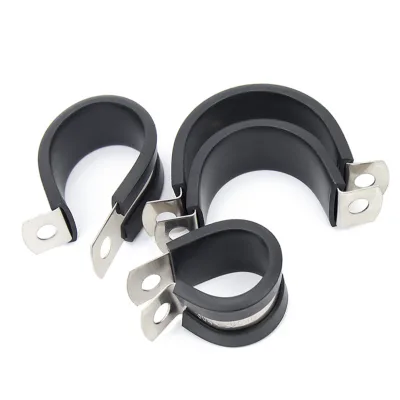
Find and compare 30 u bolt pipe clamp options from China suppliers. These heavy-duty clamps are available in carbon steel and stainless steel 304, featuring press connections and universal structures. Buyers can select customized sizes and quick-install designs for various industrial applications.
Key considerations
Products List




Comprehensive Sourcing Guide
U Bolt Pipe Clamp Sourcing Guide
Procurement professionals must first distinguish between the specific variants of U bolt pipe clamps available in the current market, as the supplied data reveals a diverse range of models including U Clamp, U Bolt Clamp, and Heavy Duty Hose Clamps. Buyers should verify that the listed product model matches their specific engineering requirements, noting that some listings specify a size range of 25-150mm while others offer customized sizes acceptable for unique infrastructure projects.
The observed market signals indicate a significant variation in material composition, with suppliers offering both Carbon Steel and Stainless Steel options, including specific grades like Stainless Steel 304 and 316. Sourcing teams must carefully cross-reference the material specification against the intended environment, as the presence of Silver-colored finishes and various surface treatments like Zinc or Black suggests different corrosion resistance profiles that directly impact long-term asset durability.
Product Scope and Observed Listing Signals
Buyers should analyze the structural diversity presented in listings, which range from Universal structures to specialized Line Fittings and Substation Fittings designed for heavy-duty applications. The data confirms that these components are often marketed with keywords like Quick Install Tube Clamps, indicating a focus on efficiency during installation, yet the specific usage context—whether for Automobile, Industrial, or Pole Line applications—must be explicitly confirmed to ensure the clamp geometry aligns with the pipe diameter and load requirements.
It is critical to observe the packaging variations listed, which include Carton, Pallets, Bags, and Wooden Cases, as these choices reflect the supplier's logistics strategy and the fragility of the components. Procurement teams must determine if the packaging method protects the clamps from damage during transit, especially when ordering large quantities where the Minimum Order Quantity (MOQ) can range from 50 to 10,000 pieces, influencing the total landed cost and storage requirements at the destination facility.
Technical Specifications to Verify
Technical verification must begin with the connection type, as the data explicitly identifies Press Connection as a key attribute for certain models, requiring specific tooling and installation protocols that differ from traditional bolted connections. Buyers need to confirm the bolt grade, with some listings specifying bolts that are not less than 6.8 Grade, ensuring the fastener strength is sufficient to withstand the tension and shear forces expected in the intended application without premature failure.
Dimensional accuracy is another critical verification point, as the observed specifications include both Inch measurement systems and metric ranges like 25-150mm, creating potential confusion if the project design uses a different standard. Sourcing teams must validate the surface finish, noting observations of Smooth finishes alongside Galvanization standards like ISO 1461-2009, to ensure the coating thickness and quality meet the environmental exposure requirements of the installation site.
Compliance and Safety Documentation
Compliance verification requires a rigorous review of the certification documents provided by the supplier, as the observed data lists ISO, GS, RoHS, and CE certifications which indicate adherence to various international safety and environmental standards. Buyers should request current certificates for each specific batch or production run to ensure that the materials and manufacturing processes have not deviated from the certified parameters, particularly when the products are destined for regulated industries like substation fittings or automobile manufacturing.
Safety documentation must also address the warranty terms and the condition of the goods, with listings indicating a 12-month warranty and New condition status as standard expectations. Procurement teams should verify that the warranty covers specific failure modes related to material defects or coating delamination, ensuring that the supplier accepts liability for premature failures that could compromise the structural integrity of the piping system or the safety of the installation.
Cost Drivers and Commercial Terms
Cost analysis must account for the significant variability in pricing, with observed listings ranging from 0 to 5.6 USD, which suggests that unit costs are heavily influenced by material grade, order volume, and specific customization requirements. Buyers should be aware that while some suppliers offer free samples to facilitate testing, the actual unit price will likely fluctuate based on the MOQ, which can be as low as 50 pieces or as high as 10,000 pieces, directly impacting the per-unit economics of the purchase.
Commercial terms must clearly define the delivery timeline, as the observed data indicates a delivery time of 20-25 days for certain orders, which is a critical factor for project scheduling and inventory management. Procurement professionals should negotiate lead times that account for potential delays in raw material sourcing or production bottlenecks, ensuring that the contract includes penalties for late delivery to mitigate the risk of project delays caused by missing critical pipe clamp components.
Supplier Qualification and Quality Control
Supplier qualification should prioritize manufacturers located in verified industrial hubs such as Zhejiang and Yangzhou City in China, where the data indicates a concentration of production facilities capable of meeting high-volume demands. Buyers must assess the supplier's capability for ODM and OEM services, as the availability of customization suggests a flexible manufacturing process that can adapt to specific design requirements, but this flexibility must be balanced with strict quality control measures to maintain consistency across large orders.
Quality control protocols must be established to verify the consistency of the product condition and material composition, ensuring that every batch meets the specified standards for Carbon Steel or Stainless Steel. Sourcing teams should implement a pre-shipment inspection process that checks for surface defects, correct bolt grades, and accurate dimensions, as the observed variations in packing and model numbers indicate a need for rigorous incoming quality checks to prevent the receipt of non-conforming goods.
Long-Term Procurement Checks
Long-term procurement strategies must include regular audits of the supplier's ability to maintain consistent quality over time, particularly given the observed range of standards from ISO 1461-2009 to general Steel standards. Buyers should establish a performance scorecard that tracks delivery reliability, defect rates, and responsiveness to customization requests, ensuring that the supplier remains a viable partner for future projects that may require different specifications or larger volumes.
Sourcing teams should also monitor the market for changes in material costs and regulatory requirements that could impact the availability of specific grades like Stainless Steel 304 or 316. By maintaining a relationship with suppliers who offer free samples and accept ODM orders, buyers can stay agile and adapt to changing project needs without incurring excessive costs, ensuring a steady supply of high-quality U bolt pipe clamps for ongoing infrastructure and industrial maintenance.
FAQs
What materials are used for u bolt pipe clamps?
U bolt pipe clamps are commonly manufactured from carbon steel and stainless steel. Stainless steel options often include grades 304 and 316 for corrosion resistance. Carbon steel variants provide high strength for heavy-duty applications. Buyers can select materials based on environmental exposure and load requirements to ensure long-term durability and structural integrity.
Can u bolt pipe clamps be customized?
Yes, customization is available for u bolt pipe clamps. Manufacturers accept OEM and ODM requests to tailor dimensions and specifications. Customized sizes are acceptable to fit specific pipe diameters ranging from 25mm to 150mm. This flexibility allows buyers to obtain precise fittings that match their unique industrial or construction project requirements effectively.
What is the typical MOQ for u bolt pipe clamps?
The minimum order quantity for u bolt pipe clamps typically starts at 500 pieces. However, MOQs can range up to 10,000 pieces depending on the supplier and product specifications. Buyers should verify the exact MOQ with manufacturers, as bulk orders may offer better pricing and streamlined production scheduling for large-scale industrial procurement needs.
Which certifications apply to u bolt pipe clamps?
U bolt pipe clamps may carry certifications such as ISO, GS, RoHS, and CE. These certifications indicate compliance with international quality and safety standards. Some products also adhere to specific galvanization standards like ISO 1461-2009. Buyers should request certification documents to verify that the clamps meet the regulatory requirements of their target market or industry.
How are u bolt pipe clamps packaged for shipping?
U bolt pipe clamps are packaged in cartons, pallets, bags, or wooden cases. The packaging method depends on the order size and supplier logistics. Carton and pallet packaging is common for standard orders, while wooden cases may be used for heavier or bulk shipments. Proper packaging ensures the clamps remain protected from damage during transit and storage.
What is the lead time for u bolt pipe clamps?
The delivery time for u bolt pipe clamps is typically 20 to 25 days. This lead time applies to standard production runs after order confirmation. Buyers should account for this duration when planning their supply chain. Expedited options may be available for urgent projects, but standard lead times ensure consistent quality control and efficient manufacturing processes.